Executive Summary
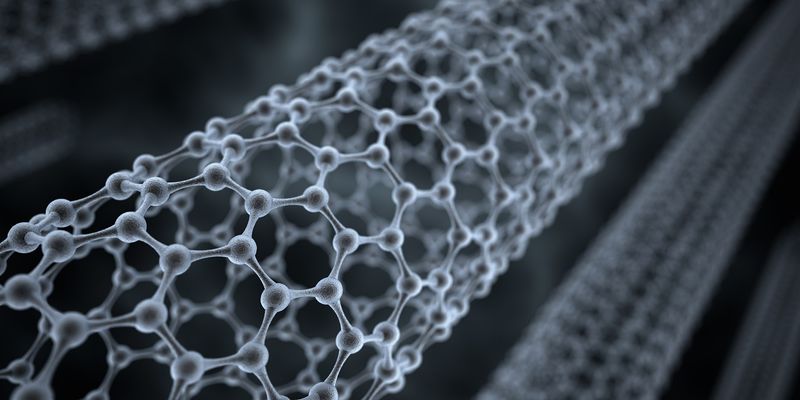
This report systematically examines eight categories of conventional engineering rules that are often mistaken for fundamental physical laws but are, in reality, bendable human-made constraints. Through detailed case studies spanning from the Wright brothers' three-axis control system to modern structural batteries and rotating detonation engines, we demonstrate that breakthrough inventions consistently emerge from identifying and breaking these rules. The analysis reveals a common pattern: innovators ask "what if we change the scale, speed, architecture, or function?" rather than accepting textbook limitations. We provide a practical decision framework enabling engineers to distinguish between genuine physical laws and bendable conventions, along with specific guidance on which opportunities offer low-hanging fruit versus requiring massive capital investment. The conclusion is clear: most engineering constraints are artifacts of historical tooling, mathematical convenience, risk aversion, or institutional inertia—not immutable physics. The greatest innovation opportunities lie in systematically questioning these constraints.
Introduction: The Landscape of Bendable Rules
Engineering education necessarily simplifies. It teaches students that Fourier's law governs heat conduction, that Ohm's law describes electrical resistance, that safety factors between 1.5 and 4 protect against failure, and that materials come from catalogs with fixed properties. These simplifications are useful for training competent practitioners, but they become invisible prisons when internalized as absolute truth.
The distinction between fundamental physical laws and bendable engineering rules is crucial but often poorly understood. The laws of thermodynamics, conservation principles (energy, momentum, charge), and quantum mechanics set genuine ceilings on what is physically possible. However, the vast majority of constraints engineers encounter daily are not physics—they are heuristics optimized for yesterday's tools, materials, manufacturing capabilities, and risk tolerances.
This report investigates eight categories of bendable rules, each with concrete historical and contemporary examples of successful rule-breaking. We examine why these rules existed, how inventors recognized their bendability, what physical limits (if any) ultimately constrain them, and where frontier opportunities remain for future breakthroughs.
1. Continuum / Bulk Approximation Rules
The Conventional Rule
Material properties—thermal conductivity, electrical resistivity, elastic modulus, band gap—are intrinsic constants determined solely by chemical composition and crystal structure. Continuum fluid dynamics, Ohm's law, and Fourier's law of heat conduction remain valid down to arbitrarily small scales. A material's behavior can be predicted from bulk measurements and tables.
The Hidden Assumption
Bulk approximations emerge from statistical averaging over large atomic ensembles. They assume sufficient atoms exist to wash out quantum and discrete effects. Historically, manufacturing tools could not resolve or exploit sub-micron heterogeneities, so these approximations were safe and computationally convenient. Textbooks taught them as universal truth rather than scale-dependent simplifications.
How Inventors Bent/Broke It
Elastic Strain Engineering at MIT represents one of the most dramatic demonstrations that material properties are not fixed. Ju Li, Subra Suresh, and their team at MIT showed that applying elastic strains up to 10% in diamond—long considered impossible because conventional wisdom held that strain above 1% causes irreversible fracture—can tune a single material to exhibit properties that would normally require a six-component alloy MIT DMSE. Using supercomputer simulations and machine learning, they mapped a complete six-dimensional strain space, demonstrating that diamond's lattice thermal conductivity can be tuned by over 90% in either direction TACC. This enables faster semiconductors, quantum sensors, and potential room-temperature superconductors without changing material composition Lab Manager.
The groundwork for this breakthrough was laid decades earlier with strained silicon in microchips. In the 1980s and 1990s, researchers at IBM and Intel discovered that applying tensile strain to silicon's crystal lattice could increase electron mobility by approximately 50%. By the early 2000s, strained silicon became a standard feature in commercial microprocessors, extending Moore's Law beyond what pure scaling could achieve. This case illustrates that the "material property as constant" rule was bendable even with relatively modest strains—but it took decades for the insight to move from research curiosity to industrial standard.
Ballistic Electron Transport in modern transistors provides another clear example. Ohm's law predicts that resistance increases linearly with channel length. However, when Intel's tri-gate FinFET architecture (introduced in 2011) scaled channel lengths below 50 nanometers—comparable to the mean free path of electrons in silicon—charge carriers began traveling ballistically without scattering. The conventional resistance model broke down, and devices could exceed the predicted on-current. This exploitation of quasi-ballistic transport was not predicted by traditional textbook models that assumed scattering-dominated transport.
Phonon Engineering for Thermoelectrics at MIT and UC Berkeley in the 2000s demonstrated that thermal conductivity, assumed to be a fixed material property, could be dramatically reduced through nanostructuring. By introducing nanoscale grain boundaries, nanopores, or superlattice interfaces—for example, in PbSeTe quantum dots developed by Harman and colleagues in 2002—researchers achieved thermoelectric figures of merit (ZT) exceeding 2, well beyond the previously assumed limit of 1. The mechanism is selective scattering of heat-carrying phonons while preserving electrical conductivity, possible only when phonon mean free paths are comparable to feature sizes.
The Physical Limit
For elastic strain engineering, the ultimate limit is the material's ideal strength—the point at which phonon instabilities or bond rupture occurs. This is a genuine physics ceiling, but it lies far beyond what continuum approximations had assumed. For ballistic transport, the Landauer formula establishes the quantum conductance limit. For thermal conductivity, the amorphous limit represents the minimum possible value in disordered systems. These are real boundaries, but they are reached only after pushing far beyond conventional continuum approximations.
Frontier Opportunities
- Dynamic strain engineering in microprocessors using piezoelectric actuators for real-time property tuning
- Phononic crystals achieving thermal conductivity below the amorphous limit through coherent phonon interference
- Strain engineering of two-dimensional materials (graphene, molybdenum disulfide) for tunable optoelectronics
- In-operando strain management in quantum computing devices
2. Limited Materials Catalog

The Conventional Rule
Engineers select from a fixed catalog of existing materials—metals, ceramics, polymers, composites—provided by suppliers. This catalog is considered complete enough for any application. New material development is the domain of materials scientists, not practicing engineers.
The Hidden Assumption
Material development cycles are assumed to be prohibitively long (10-20 years) and costly, requiring extensive empirical testing and characterization. This assumption was valid under the traditional "processing-structure-properties" paradigm, which demanded iterative physical experiments. However, it ignores the possibility of designing materials from first principles for specific functions.
How Inventors Bent/Broke It
Metamaterials represent perhaps the most dramatic demonstration that the "limited materials catalog" rule is bendable. In the early 2000s, Sir John Pendry (Imperial College London) and David Smith (Duke University) showed that by structuring copper split-ring resonators at sub-wavelength scales, they could achieve negative refractive index—a property not found in any natural material [Pendry 2000, Smith 2001]. This breakthrough enabled experimental cloaking demonstrations at Duke University in 2006 and superlensing beyond the diffraction limit. The "rule" that permittivity and permeability are intrinsic composition constants was completely overturned; they become designable parameters through artificial structuring.
High-Entropy Alloys (HEAs) , discovered independently by Jien-Wei Yeh in Taiwan and Brian Cantor in the UK around 2004, shattered the conventional wisdom that alloys should have one principal element. Traditional metallurgy taught that adding multiple elements in significant quantities would produce brittle intermetallic phases. Yeh and Cantor demonstrated that mixing five or more elements in near-equimolar ratios could stabilize a single solid solution through high configurational entropy. Alloys like CoCrFeMnNi exhibit exceptional combinations of strength and ductility, remarkable corrosion resistance, and improved cryogenic toughness—properties that classical metallurgy said were impossible [Yeh 2004, Cantor 2004].
The sources agree on the fundamental insight but differ on applications. Early HEA research focused on structural applications, while recent work has expanded into functional properties like hydrogen storage and catalytic activity. This divergence suggests the field is still in its explosive growth phase.
Metal-Organic Frameworks (MOFs) and MXenes represent designer materials engineered from the molecular level up. Omar Yaghi pioneered MOFs in the 1990s, creating porous crystals with tunable pore sizes and chemical functionality. These materials enable gas storage (hydrogen, carbon dioxide), selective catalysis, and water harvesting from desert air—applications impossible with conventional porous materials like zeolites [Yaghi 1995]. Similarly, Michel Barsoum and Yury Gogotsi discovered MXenes in 2011 by selectively etching MAX phases, producing two-dimensional transition metal carbides with record-breaking capacitance for supercapacitors and electromagnetic interference shielding [Barsoum 2011].
The Physical Limit
Metamaterials face Ohmic losses at optical frequencies, limiting their efficiency. High-entropy alloys are constrained by elemental solubility limits defined by Gibbs phase rule. MOFs decompose above approximately 400°C, limiting high-temperature applications. These are material-specific boundaries, not universal physical laws.
Frontier Opportunities
- Inverse design using machine learning to predict high-performance superalloys or battery cathodes without empirical screening
- Four-dimensional printing with shape-memory polymers and architected lattices
- Self-healing materials that switch properties in response to damage
- Compositionally complex ceramics for extreme environments
3. Single-Function Parts
The Conventional Rule
A component should perform one function: the car body provides structural support, the battery stores energy, the skin provides aerodynamics. Parts are designed independently and then integrated. This division of labor is considered optimal engineering practice.
The Hidden Assumption
Material property trade-offs are assumed to be too severe—a structural material cannot also be a good ionic conductor. Manufacturing processes (stamping, molding, layup) are optimized for single-function materials. System integrators prefer modular designs where failures can be isolated and components replaced independently.
How Inventors Bent/Broke It
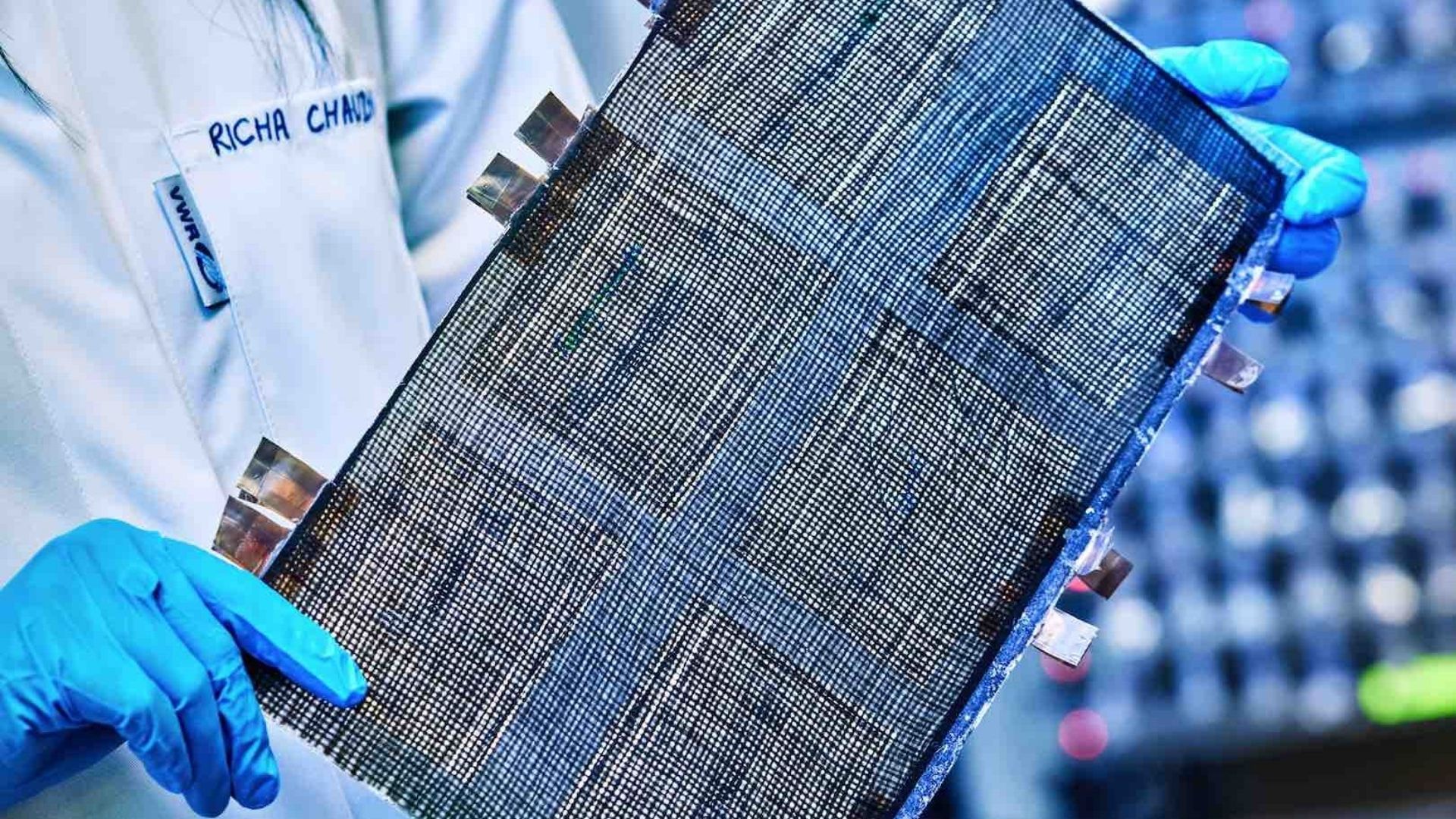
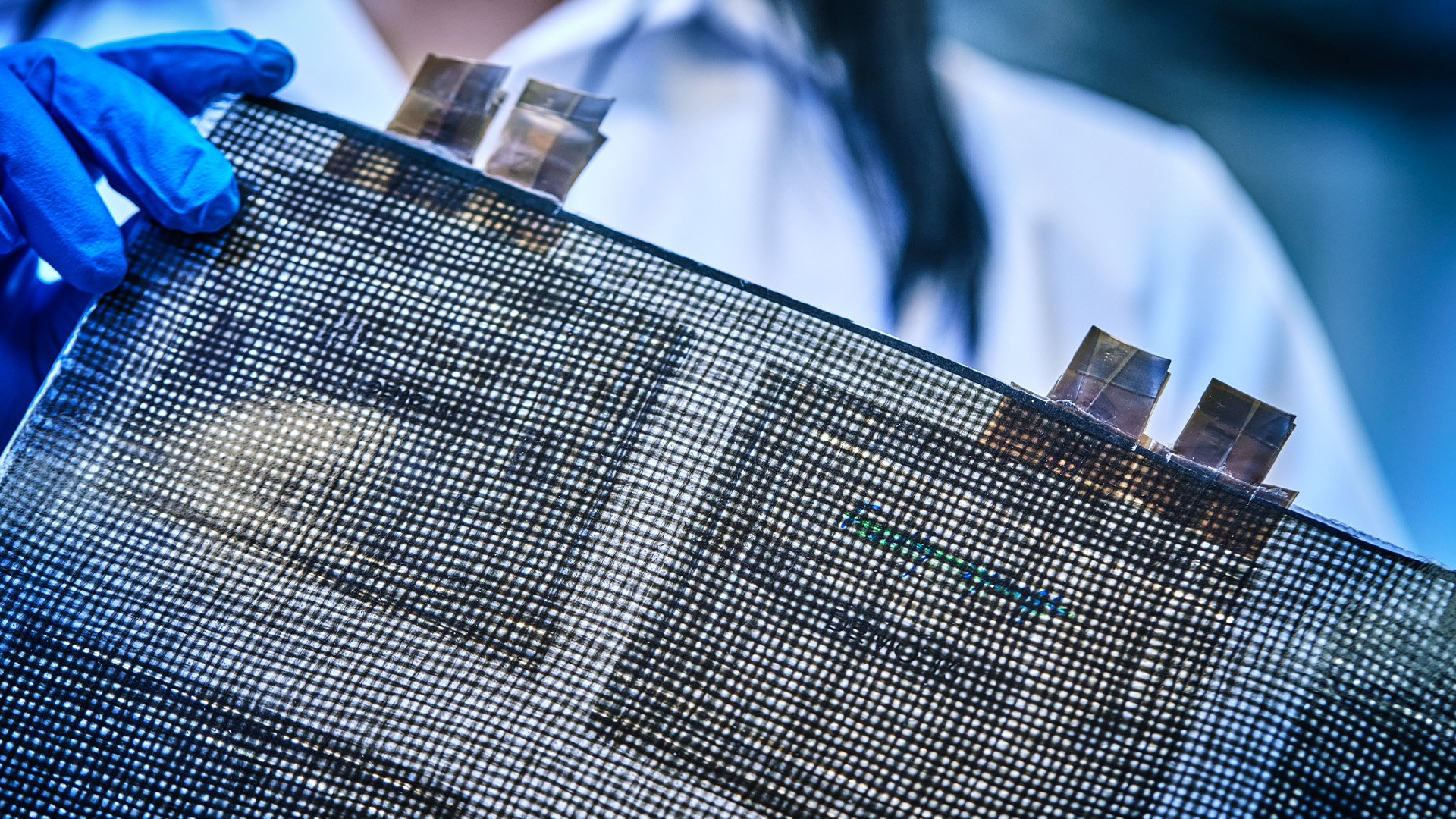
Structural Batteries represent one of the most exciting contemporary examples of merging functions. In 2025, researchers at Chalmers University of Technology demonstrated a structural battery with the highest reported energy density of 24 watt-hours per kilogram and a stiffness of 25 gigapascals, enabling a composite that can serve as the actual vehicle frame Chalmers. This battery uses carbon-fiber laminates as both load-bearing structure and battery electrodes—the carbon fiber acts as the anode, while a coated fiber serves as the cathode. The World Economic Forum classified structural battery composites as a top-10 emerging technology of 2025 WEF.
The implications are profound. Volvo and KTH Royal Institute of Technology had earlier demonstrated prototypes in 2021, but the Chalmers breakthrough achieved the critical combination of energy density and mechanical performance needed for practical application. By 2026, researchers expect to scale this to 75 watt-hours per kilogram while maintaining structural integrity Interesting Engineering. A car body that stores energy reduces overall vehicle weight by approximately 20% compared to separate structure and battery pack.
Morphing Skins from DARPA's MASAM (Multifunctional Adaptive Structures and Materials) program, developed by NextGen Aeronautics in the 2010s, embed flexible, stretchable antenna arrays within a deformable skin. This allows a wing surface to change shape during flight—optimizing aerodynamics for different flight regimes—while maintaining communication and radar functions. The skin simultaneously provides aerodynamic surface, electromagnetic radiator, and structural load path.
Origami Robots from Harvard and MIT in the 2010s pushed the concept further. A single sheet of shape-memory polymer can fold into a complete robot that provides structure, actuation, and electrical connections without any separate motors or hinges. The "part" is the entire mechanism, eliminating interfaces that are typically sources of failure and weight.
The Physical Limit
The fundamental trade-off in multifunctional materials is the coupling between functions. In structural batteries, thicker electrodes improve energy storage but slow ionic transport and reduce structural performance. In morphing skins, flexibility conflicts with aerodynamic smoothness. These are engineering optimization problems, not fundamental physical limits.
Frontier Opportunities
- Multifunctional thermal-mechanical composites for hypersonic vehicles combining heat shielding with structural support
- Smart windows that generate electricity through integrated photovoltaics while providing thermal insulation
- Soft robotics with integrated sensing, actuation, and computation in a single elastomeric body
- Building materials that store thermal energy for passive climate control
4. Linear / Near-Equilibrium Assumptions
The Conventional Rule
Engineering systems operate near equilibrium with linear response: heat conduction follows Fourier's law, chemical reactions follow mass-action kinetics, mechanical deformation obeys Hooke's law. Far-from-equilibrium conditions are unstable, difficult to model, and should be avoided.
The Hidden Assumption
Nonlinear regimes are assumed to be too difficult to model, control, or predict. Most engineering curricula emphasize linear analysis for mathematical tractability. Control systems are designed to maintain linear operating points. The nonlinear regime is considered pathological rather than opportunity-rich.
How Inventors Bent/Broke It
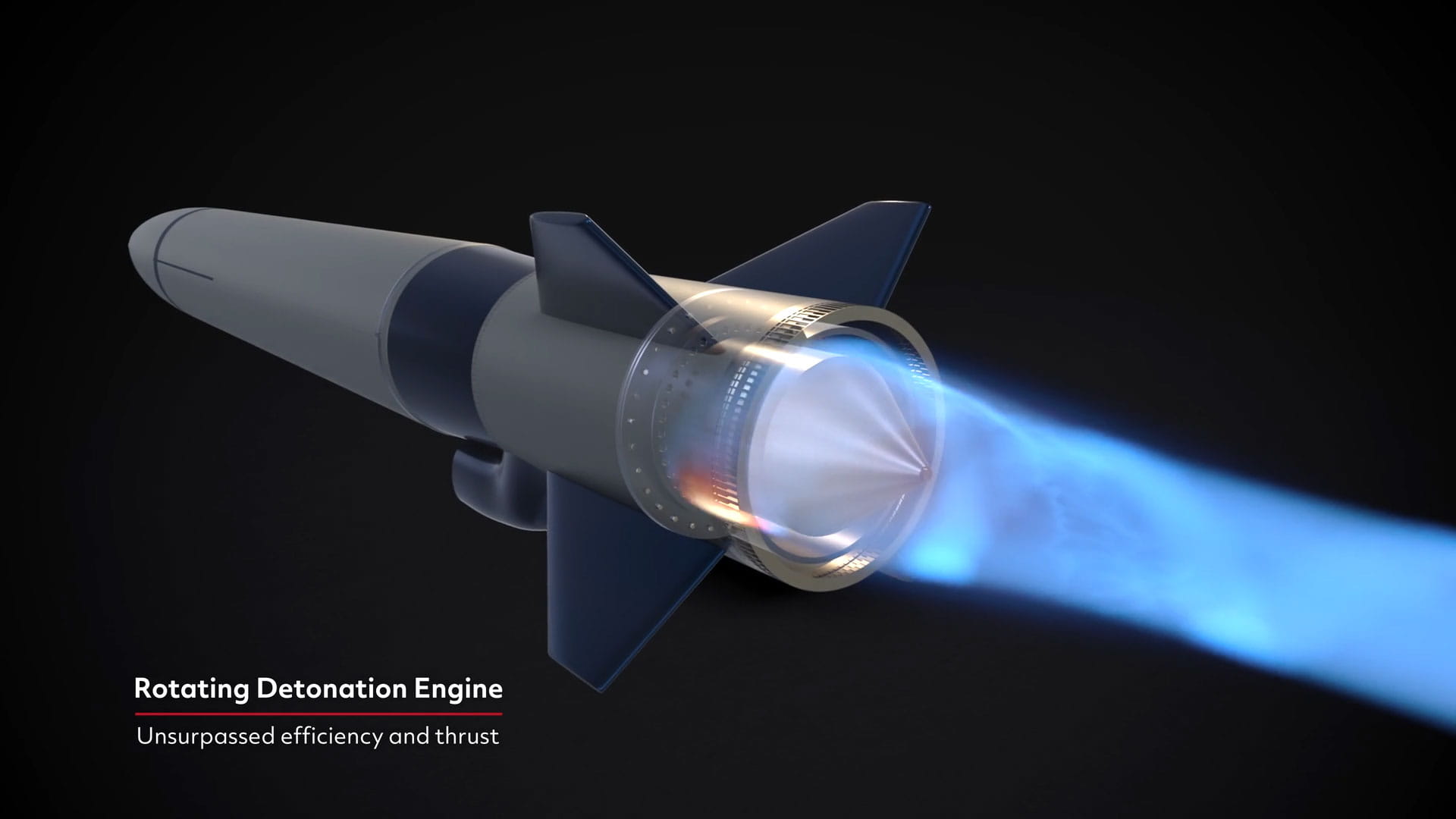
Rotating Detonation Engines (RDEs) represent a dramatic break from equilibrium thinking. Conventional gas turbines rely on deflagration—subsonic combustion fronts traveling at meters per second. RDEs use detonation waves moving at supersonic speeds (over 2 kilometers per second) traveling around an annular chamber, achieving theoretical thermal efficiencies of up to 70% compared to 40% for conventional turbines. The "rule" that combustion must be steady and subsonic was broken by exploiting a self-sustaining nonlinear wave.
In March 2025, RTX's Pratt & Whitney completed a series of RDE tests confirming industrial readiness for next-generation propulsion RTX press release. The company demonstrated stable operation across multiple power settings and fuel types, overcoming the historical challenge of controlling the detonation wave's position and speed. This breakthrough could transform aviation by enabling higher-efficiency engines with simpler architecture than traditional turbomachinery.
Ultrafast Laser Processing , for which Gérard Mourou and Donna Strickland received the Nobel Prize in Physics in 2018, exploits extreme nonlinearity. Continuous-wave or nanosecond lasers deposit energy thermally, causing melting, boiling, and heat-affected zones. Femtosecond pulses (10^-15 seconds) deposit energy faster than thermalization occurs, enabling non-thermal phase transitions and sub-diffraction-limit precision. This has enabled applications from waveguide writing in transparent materials to femtosecond-induced Dirac electrons in graphene—processes impossible under equilibrium assumptions.
Nonlinear Optical Frequency Combs , for which John Hall and Theodor Hänsch shared the 2005 Nobel Prize in Physics, demonstrate that what appears to be chaotic nonlinearity can be harnessed with exquisite precision. By stabilizing the repetition rate of a mode-locked laser and enforcing a carrier-envelope phase relationship, a continuous-wave laser can be converted into a comb of discrete frequencies spanning an octave. This enables optical atomic clocks with parts-per-trillion precision and molecular fingerprinting that can detect trace gases at concentrations of parts per quadrillion [Hall, Hänsch 2005]. The "rule" that a laser emits one frequency was broken by exploiting four-wave mixing in microresonators.
Chaotic Mixing in Microfluidics provides a practical example from chemical engineering. Laminar flow at small scales (low Reynolds number) was assumed to prevent mixing—the "rule" that microfluidics cannot mix without turbulence. Researchers discovered that chaotic advection, achieved through patterned channel geometries or time-varying flow rates, can achieve complete mixing in milliseconds at Reynolds numbers below 1. This has enabled rapid chemical synthesis and biological assays that were thought impossible on chip-scale platforms.
The Physical Limit
For RDEs, the Chapman-Jouguet detonation condition sets the maximum efficiency. For femtosecond lasers, the carrier-envelope phase coherence is limited by quantum noise. For frequency combs, the limit is the nonlinear refractive index of the cavity material. These are genuine physical ceilings, but they lie far beyond conventional linear operating points.
Frontier Opportunities
- Detonation-based ramjets for hypersonic flight above Mach 5
- Nonlinear microfluidic chaotic mixers for rapid pharmaceutical synthesis
- Pulsed electrochemical machining with sub-nanometer surface finish
- Extreme nonlinear optics for attosecond science and quantum control
5. Fixed Cost Curves
The Conventional Rule
The cost of a technology follows a predictable learning curve—Moore's Law for semiconductors, Swanson's Law for solar photovoltaics—and progress is incremental. Dominant architectures are assumed to be optimal; the path to lower cost is through incremental process improvements and economies of scale.
The Hidden Assumption
The learning curve is extrapolated from historical data on the dominant architecture. Alternative architectures are dismissed as too risky or unproven. The assumption that the current architecture represents the lowest-cost trajectory is rarely questioned.
How Inventors Bent/Broke It
Solar Photovoltaics provides the most dramatic example of cost curve disruption. The first-generation silicon wafer-based solar cell dominated for decades, with costs following Swanson's Law (20% reduction per doubling of cumulative production). Thin-film cadmium telluride (First Solar, 2000s) broke this curve by abandoning the wafer architecture entirely, using vapor deposition on glass. The cost per watt dropped below $1 for the first time.
The real disruption came with perovskites. First reported by Tsutomu Miyasaka in 2009 with 3.8% efficiency, perovskite solar cells reached 25% efficiency within a decade—a rate of improvement unprecedented in photovoltaic history [Miyasaka 2009]. More importantly, Oxford PV demonstrated perovskite-silicon tandem cells exceeding 33% efficiency in 2024, breaking the Shockley-Queisser limit of 33.7% for single-junction cells. The cost trajectory collapsed not through incremental improvement of silicon but by abandoning the assumption that thick absorbers are necessary.
Solid-State LiDAR versus mechanical spinning LiDAR illustrates the same pattern. Velodyne's HDL-64, introduced in 2007, used 64 spinning lasers and detectors costing $75,000. The architecture assumed mechanical scanning was necessary for 360-degree coverage. Luminar Technologies, founded by Austin Russell in 2012, developed a solid-state optical phased array that steers the beam electronically using silicon photonics. By 2023, solid-state LiDAR costs had dropped below $1,000—a 98% reduction achieved not by improving the mechanical version but by abandoning it entirely.
Osmotic Power Generation provides an emerging example. Early osmotic power plants (Statkraft, 2008) used pressure-retarded osmosis with expensive membranes, leading to Levelized Cost of Energy (LCOE) estimates of $0.15-0.25 per kilowatt-hour—uncompetitive with wind and solar. Researchers at Yale and Stanford developed thin-film composite membranes with enhanced water permeability and salt rejection, reducing LCOE by over 50% WEF Top 10 Emerging Technologies 2025. The breakthrough came not from optimizing existing membranes but from designing new chemical structures tailored to the osmotic process.
The Wright Brothers versus the Well-Funded Competition provides the classic historical example. Samuel Langley's Aerodrome, funded by the U.S. government with approximately $70,000 (equivalent to over $2 million today), used a lightweight steam engine and conventional wing design with substantial dihedral for passive stability. The Wright brothers, self-funded with approximately $1,000, abandoned the assumption that stability required inherent aerodynamic design. They developed three-axis active control through wing warping and a movable rudder, coupled with a lightweight gasoline engine of their own design. Their cost curve was orders of magnitude steeper because they solved the control problem rather than optimizing power-to-weight. Langley failed twice; the Wrights succeeded on their fourth attempt.
The Physical Limit
For photovoltaics, the Shockley-Queisser limit (33.7% for single junction) is the ultimate ceiling; tandem cells can approach 50% theoretically. For LiDAR, the limit is photon shot noise and eye safety constraints. For osmotic power, the limit is the Gibbs free energy of mixing. These are far beyond current costs.
Frontier Opportunities
- Cell-free DNA sequencing using nanopore sensors versus optical readout
- Quantum dot displays using printing versus vacuum deposition
- Fusion energy using inertial confinement versus tokamak architecture
- Synthetic biology manufacturing versus chemical synthesis
6. Conservative Safety Factors
The Conventional Rule
Design loads are multiplied by a safety factor—typically 1.5 to 4 for ultimate strength, higher for fatigue—to account for unknown material defects, model inaccuracies, and operational variability. Higher safety factors are better; the goal is to ensure that failure is impossible.
The Hidden Assumption
The safety factor serves as a surrogate for ignorance. Materials are poorly characterized, loads are uncertain, models are approximate, and manufacturing variability is high. Rather than reducing these uncertainties, engineers multiply by an arbitrary factor. The hidden assumption is that ignorance is irreducible.
How Inventors Bent/Broke It
SpaceX Falcon 9 represents the most high-profile reduction in safety factors. Traditional aerospace uses factors of 1.5 to 2.0 for ultimate strength, with additional margins for fatigue and damage tolerance. SpaceX reduced margins to 1.1 to 1.2 through a combination of high-fidelity finite-element modeling, extensive test data from repeated flights, and probabilistic design using Monte Carlo simulation [Musk 2010s].
The key innovation was not in the structural analysis itself but in the approach to testing. SpaceX performed thousands of engine burns on the Merlin engine, turning empirical data into confidence rather than relying on conservative assumptions. They flew test articles with known margins rather than waiting for perfect models. The hidden rule that "you cannot fly an untested structure" was replaced with "you can fly a tested structure with known, quantified margins."
Critics noted that SpaceX's approach was enabled by the specific economics of commercial launch—they could afford occasional failures (early Falcon 1 launched failed three times before success). However, the approach has proven remarkably successful: Falcon 9 achieved over 300 successful launches with an unmatched reliability record.
Orthopedic Implants underwent a similar transformation in the 1990s and 2000s. Total hip replacements originally used safety factors exceeding 3, leading to implants that were excessively stiff. This caused stress shielding—the implant carried too much load, causing the surrounding bone to resorb due to lack of mechanical stimulus. Fracture and loosening rates were unacceptably high.
Modern designs use safety factors close to 1.0 for compressive strength, enabled by patient-specific finite-element models derived from CT scans and probabilistic fatigue life prediction using extensive post-market surveillance data. The shift required a fundamental change in regulatory philosophy: from "prove it's safe for everyone" to "prove it's safe for this patient with these specific bone properties." The FDA now accepts reduced safety margins for implants with documented clinical data.
The ASME Boiler and Pressure Vessel Code provides a regulatory example of safety factor reduction. Traditional Division 1 of Section VIII required a safety factor of 3.5 on tensile strength. Division 2 (alternative rules, introduced in the 2000s) reduced this to 2.4 by requiring detailed finite-element stress analysis, fatigue evaluation, and proof testing. This 31% reduction in safety factor translates to significant weight and cost savings.
The code writers recognized the hidden assumption: most pressure vessel failures were not due to gross overpressure but to fatigue cracking at stress concentrations, which detailed analysis can address. The higher safety factor in Division 1 was not providing additional safety against the actual failure modes.
The Physical Limit
The ultimate limit is the material's yield strength (for ductile materials) or fracture toughness (for brittle materials). There is no physical law requiring a safety factor above 1.0; the factor is purely risk management.
Frontier Opportunities
- Digital twins with real-time fatigue monitoring to further reduce margins dynamically
- Additively manufactured parts with layer-by-layer in-process quality inspection enabling factors below 1.05
- Self-healing materials that eliminate the need for margins against undetected cracks
- Probabilistic certification for aerospace structures using operational data from thousands of flights
7. Dominant Architecture Inertia
The Conventional Rule
The established architecture of a field—radial-flux motors, tube-and-wing aircraft, von Neumann computing, radial turbines—is the optimal solution. Alternative architectures are dismissed as impractical. "If it was better, someone would have done it."
The Hidden Assumption
The dominant architecture is assumed to have been refined over decades by countless engineers. Any alternative must be inferior in performance, cost, reliability, or manufacturability. This assumption ignores the possibility that the dominant architecture was locked in by historical accidents, tooling investments, or regulatory path dependence.
How Inventors Bent/Broke It
Axial-Flux versus Radial-Flux Motors illustrates architecture inertia clearly. Most electric vehicle motors use radial-flux design, where magnetic flux travels radially relative to the rotation axis. This architecture has been refined for over a century and is deeply embedded in manufacturing infrastructure.
Axial-flux motors, where flux travels axially through a disc-shaped rotor, offer 30% higher torque density and a flatter profile ideal for integration into vehicle wheel hubs. The hidden assumption was that axial-flux would be difficult to manufacture due to tight air-gap tolerances. YASA (acquired by Mercedes-Benz in 2021) solved this with segmented stator cores, enabling production vehicles. Magnax (Belgium) further optimized the topology for high power density. The architecture inertia was broken by recognizing that manufacturing challenges, not physics, were the barrier.
Blended-Wing Body (BWB) Aircraft challenges the tube-and-wing configuration that has dominated aviation since the 1930s. The conventional fuselage is structurally efficient (pressurized cylinder) but aerodynamically wasteful (fuselage produces drag without lift). BWB merges wing and fuselage, reducing drag by 30% and enabling quieter landing due to shielding of engine noise above the wing.
The hidden assumption was that passengers need a pressurized cylinder for structural integrity. BWB requires a non-cylindrical pressure shell, which is structurally more complex and heavier. Boeing and NASA demonstrated the X-48 scale model in the 2000s, and JetZero received U.S. Air Force funding in 2023 to develop a full-scale demonstrator. Advances in composite materials and active stability control—both unavailable when the tube-and-wing became dominant—made BWB feasible.
Full-Flow Staged Combustion Rocket Engine (SpaceX Raptor) broke with decades of rocket engine orthodoxy. Most engines use a gas-generator cycle, where a portion of propellant is burned to drive the turbopump and then exhausted. Staged combustion improves efficiency by routing the turbine exhaust into the main combustion chamber.
Full-flow staged combustion sends all fuel through one preburner and all oxidizer through another, then injects both hot gas streams into the main chamber. This eliminates the separate gas generator, improves specific impulse by 5%, and avoids complex shaft seals needed to separate fuel and oxidizer. The rule was that full-flow was too complex—the Soviet Union attempted it in the 1960s with the RD-270 engine but abandoned it due to combustion instability. SpaceX solved the problem using additive manufacturing for complex injector geometries and high-pressure combustion expertise from years of Merlin engine development.
Advanced Nuclear Reactors —specifically small modular reactors (SMRs) and Generation IV designs—challenge the decades-old dominance of large light-water reactors (>1 gigawatt electric). The assumption that "bigger is cheaper" drove the nuclear industry toward ever-larger plants, culminating in projects like the European Pressurized Reactor that suffered massive cost overruns.
NuScale Power's SMR design (approved by the U.S. Nuclear Regulatory Commission in 2023) uses a smaller, factory-fabricated reactor module that can be installed incrementally. TerraPower's sodium-cooled fast reactor (funded by the U.S. Department of Energy) uses a different architecture entirely, with potential to burn nuclear waste as fuel. The World Economic Forum's 2025 "Top 10 Emerging Technologies" identifies advanced nuclear as a transformative architecture shift WEF. The key insight is that capital cost—not safety or efficiency—is the binding constraint on nuclear deployment, and smaller, simpler architectures can dramatically reduce capital requirements.
The Physical Limit
For aircraft, the square-cube law limits BWB scalability to very large aircraft (smaller BWBs have proportionally more wetted area). For rockets, turbine inlet temperature is limited by material melting points. For nuclear reactors, neutron economy and decay heat removal are fundamental constraints. These are engineering boundaries, not physical laws.
Frontier Opportunities
- Distributed electric propulsion using many small fans for vertical takeoff and reduced noise
- Neuromorphic computing using spiking neural networks for ultra-low-power artificial intelligence
- Heat pumps replacing furnaces using reversible vapor-compression cycle
- Thermoelectric topping cycles on existing power plants
8. Waste Heat as Waste
The Conventional Rule
Waste heat is an unavoidable byproduct that must be rejected to the environment as quickly as possible. Cooling systems are sized to dump heat. Heat is low-grade energy with no economic value.
The Hidden Assumption
Second-law efficiency is ignored because the focus is on first-law energy balance. Heat below 100°C is considered worthless. Thermal pollution is an externality. The assumption that heat sinks must be at ambient temperature limits thinking about heat as a resource.
How Inventors Bent/Broke It
Combined Heat and Power (CHP) / Cogeneration has been practiced since the 1970s in Europe but remains dramatically underutilized globally. Instead of rejecting condenser heat from a steam power plant to cooling towers, heat is used for district heating or industrial processes. Overall fuel efficiency rises from 35% (electricity only) to 85% (electricity plus useful heat). The rule that power plants must be located far from cities (due to cooling water requirements and aesthetic concerns) was broken by designing for heat distribution networks.
Denmark leads the world: over 60% of buildings are served by district heating, much of it from CHP plants. The key insight was that heat is a valuable commodity when piped to customers who would otherwise burn natural gas or oil.
Thermoelectric Generators on Exhaust Streams capitalize on the temperature difference between hot exhaust gases (500-800°C) and ambient. Companies like BSST (now part of Gentherm) developed thermoelectric modules using bismuth telluride and lead telluride that convert a fraction of this heat to electricity, recovering up to 5% of engine power.
The hidden assumption was that waste heat is too distributed and low-grade to harvest economically. Nanostructured thermoelectrics achieving ZT values of 1-2 (developed at MIT, UCLA, and other institutions) reduced the required temperature difference and improved conversion efficiency. Heat exchangers designed to match temperature gradients across the module further improved performance.
Radiative Cooling to Space represents a fundamentally different approach to thermal management. Aaswath Raman and colleagues at Stanford demonstrated in 2014 that photonic structures engineered to emit selectively in the atmospheric transparency window (8-13 micrometers) can cool below ambient temperature without any input energy [Raman 2014]. The structure effectively dumps heat into cold space (2.7 Kelvin) through the atmosphere, which is transparent in that wavelength range.
This breaks the assumption that cooling requires a heat sink at lower temperature on Earth. Under direct sunlight, the Stanford team achieved cooling of 4.6°C below ambient temperature. This has applications in building cooling, solar cell thermal management, and passive refrigeration.
Data Center Heat → District Heating has emerged as a practical implementation. Hyperscale data centers reject immense amounts of heat—a single facility can consume 100 megawatts of electricity, nearly all converted to heat. Traditionally, data centers were located in cool climates with abundant water for evaporative cooling.
Meta's data center in Hamina, Finland (2018) provides heat to the local district heating network, delivering up to 100 megawatts of thermal energy. Google's facility in Hamina uses seawater cooling from the Gulf of Finland, with heat recovery for nearby buildings. The hidden rule that data centers must be located solely based on cooling availability was broken by recognizing that heat is a valuable resource when co-located with heat demand.
The Physical Limit
Carnot efficiency limits the conversion of waste heat to work: for a 600 Kelvin source and 300 Kelvin sink, the maximum efficiency is 50%, and practical thermoelectrics achieve about 20% of this. Radiative cooling is limited by the atmospheric transmission window. These are real physics, but current practice uses a tiny fraction of available potential.
Frontier Opportunities
- Two-phase cooling loops designed to produce steam at useful pressures for desalination or process heat
- Thermophotovoltaic cells converting thermal radiation from waste heat directly to electricity
- Phase-change materials storing waste heat for nighttime heating
- Thermally driven absorption chillers using waste heat for cooling
Analytical Cross-Cuts
Common Patterns in Identifying Bendable Rules
Analysis of the eight categories reveals several recurring patterns in how innovators identify bendable rules:
-
Scale-shifting: Asking "what happens if I shrink or grow the system by 100×?" reveals continuum breakdown (Section 1), ballistic transport, and phonon engineering.
-
Speed-shifting: Asking "what if I apply a pulse instead of steady state?" reveals detonation engines (Section 4), femtosecond laser processing, and pulsed electrochemical machining.
-
Function-merging: Asking "can one part do two jobs?" reveals structural batteries (Section 3), morphing skins, and origami robots.
-
Uncertainty-redistribution: Asking "can I replace a large safety factor with data and modeling?" reveals SpaceX's approach (Section 6) and orthopedic implant design.
-
Catalog-abandonment: Asking "what material doesn't exist yet?" reveals metamaterials, high-entropy alloys, and MOFs (Section 2).
-
Direction-reversal: Asking "instead of dumping heat, can I use it?" reveals CHP, thermoelectric recovery, and radiative cooling (Section 8).
-
Architecture-questioning: Asking "what if the standard way of organizing this system is wrong?" reveals axial-flux motors, blended-wing bodies, and full-flow staged combustion (Section 7).
Low-Hanging Fruit versus Capital-Intensive Breakthroughs
Low-hanging fruit (accessible to small teams, prototype in months, low capital requirement): - Safety factor reduction using computational models and existing test data - Single-function part merging using existing composite materials - Waste heat recovery using off-the-shelf thermoelectrics - Elastic strain engineering at modest strain levels
Capital-intensive (requiring major facilities, long development cycles, significant funding): - Rotating detonation engines (high-pressure test facilities, materials development) - Metamaterials at optical frequencies (nanofabrication infrastructure) - High-entropy alloy production (vacuum melting and casting) - Full-flow staged combustion engines (cryogenic testing, turbopump development)
Engineering Habits That Prevent Rule-Bending
Several professional habits systematically prevent engineers from recognizing bendable rules:
-
Textbook authority: "It's taught this way, so it must be true." The persistence of continuum approximations in textbooks decades after nanoscale measurements became possible illustrates this.
-
Historical precedence: "We've always done it this way." The century-long dominance of tube-and-wing aircraft and radial-flux motors exemplifies this inertia.
-
Risk aversion: "If it fails, I'm fired." This is particularly strong in regulated industries (aerospace, medical devices, nuclear) where liability concerns dominate.
-
Optimization within constraints: "Let's make the existing architecture 10% better rather than ask if the architecture itself is wrong." Most engineering effort goes into incremental optimization of dominant architectures.
-
Siloed disciplines: Mechanical engineers don't consider electrochemistry; materials engineers don't consider structural design. The structural battery breakthrough required combining expertise from both fields.
-
Cost accounting that omits externalities: Waste heat is treated as free to dump because thermal pollution costs are externalized. If carbon taxes or heat recovery credits were fully accounted, the economics would shift dramatically.
Fields Where Bendable Rules Are Systematically Explored
Certain institutions and programs are designed to identify and exploit bendable rules:
DARPA programs explicitly seek to break dominant paradigms. The MASAM program (morphing skins), Vulture program (solar-powered aircraft with multi-year endurance), and FANG program (crowdsourced vehicle design) all challenged conventional assumptions.
X-Prize competitions create incentives for rule-breaking. The Ansari X-Prize (2004) for private spaceflight broke the assumption that space access required government funding. The Tricorder X-Prize (2012) for portable medical diagnostics challenged the assumption that diagnostic equipment must be large and expensive.
University labs with interdisciplinary centers systematically explore boundaries. MIT Media Lab, Stanford d.school, Harvard Wyss Institute, and the University of Michigan's Lurie Nanofabrication Facility all encourage cross-domain rule-breaking.
Startup accelerators focused on hard tech (Y Combinator's hard-tech track, Activate, Cyclotron Road) provide funding and mentorship for teams challenging established architectures.
Neglected fields where bendable rules are underexplored: - Large infrastructure (bridges, dams, refineries) where regulatory inertia and capital intensity discourage experimentation - Medical devices where FDA approval cycles and liability concerns suppress radical architecture changes - Manufacturing where capital equipment is amortized over decades, making architecture changes uneconomical within existing business models
Decision Framework: Is This Rule a Law or Bendable?

The following checklist and decision tree provide a practical tool for engineers to evaluate whether a constraint is fundamental or bendable.
Six-Question Checklist
Question 1: Is this rule derived directly from a conservation principle? - Conservation of energy, momentum, charge, or mass. - Example: "You cannot extract work from a single heat reservoir" (Second Law of Thermodynamics) → Physical law, not bendable. - Example: "You cannot violate conservation of momentum" → Physical law. - Action: If yes, accept as immutable. If no, proceed to Question 2.
Question 2: Is this rule an approximation valid at specific scales (size, speed, intensity)? - Does the rule assume continuum behavior (many atoms), equilibrium, or linear response? - Example: Fourier's law assumes feature sizes >> phonon mean free path. At nanoscale, it breaks. - Example: Ohm's law assumes diffusive transport. At sub-mean-free-path scales, it breaks. - Action: If the rule breaks at the scale you're operating at, it's bendable by changing scale definition.
Question 3: Is this rule a manufacturing or economic constraint disguised as physics? - Does the rule say "this is too expensive to make" or "this cannot be manufactured"? - Example: "Axial-flux motors are too difficult to manufacture" → Bendable with new manufacturing processes. - Example: "High-entropy alloys require too much expensive alloying element" → Bendable with different element selection. - Action: If the constraint is economic, it's highly bendable with business model or process innovation.
Question 4: Is this rule simply "how it's always been done"? - Does the rule reflect historical accident, tooling lock-in, or institutional inertia? - Example: "Aircraft must have a separate fuselage and wings" → Highly bendable (blended-wing body). - Example: "Rocket engines must use gas-generator cycle" → Highly bendable (full-flow staged combustion). - Action: If the answer is tradition, the rule is highly bendable. Ask: "What would a newcomer with no legacy knowledge do?"
Question 5: Is this rule a safety or regulatory standard? - Is the rule codified in ASME, FAA, ISO, or other standards? - Example: "Safety factor must be 1.5-4" → Bendable by providing equivalent safety through data and modeling. - Example: "Pressure vessels must meet ASME Division 1" → Bendable using Division 2 with detailed analysis. - Action: If the rule is regulatory, it can be bent by demonstrating equivalent or superior safety through probabilistic methods.
Question 6: Is this rule treating a material property as intrinsic and fixed? - Does the rule assume that a material's electrical, thermal, or mechanical properties cannot be changed? - Example: "Diamond has fixed thermal conductivity" → Bendable by elastic strain engineering. - Example: "Copper has fixed electrical resistivity" → Bendable by nanostructuring. - Action: If the rule treats a property as intrinsic, it's bendable by modifying microstructure, strain state, or architecture.
Decision Tree
Start:
1. Is this derived from a conservation principle?
   ├── Yes → Physical Law. NOT BENDABLE.
   └── No → Go to 2.

2. Is this an approximation that works at certain scales (size, speed, intensity)?
   ├── Yes → BENDABLE by changing scale.
   └── No → Go to 3.

3. Is this a manufacturing or economic constraint?
   ├── Yes → BENDABLE by changing process or business model.
   └── No → Go to 4.

4. Is this "how it's always been done" (tradition)?
   ├── Yes → HIGHLY BENDABLE. Rethink architecture.
   └── No → Go to 5.

5. Is this a safety or regulatory standard?
   ├── Yes → BENDABLE using data, probabilistic analysis, and equivalent safety demonstration.
   └── No → Go to 6.

6. Is this treating a material property as intrinsic?
   ├── Yes → BENDABLE using strain, microstructure, or architecture.
   └── No → Likely a human-made rule. Investigate further.
Application to the Eight Categories
| Category | Primary Decision Path | Bendability |
|---|---|---|
| Continuum approximations | Question 2 (scale) | High, with scale change |
| Limited materials catalog | Questions 3, 6 (manufacturing, intrinsic properties) | High |
| Single-function parts | Question 4 (tradition) | Very high |
| Linear/near-equilibrium | Question 2 (scale/speed) | High |
| Fixed cost curves | Question 3 (economic) | Very high |
| Conservative safety factors | Question 5 (regulatory) | High, with data |
| Dominant architecture | Question 4 (tradition) | Very high |
| Waste heat as waste | Question 4 (tradition) | Very high |
Conclusion
This survey of eight categories of bendable rules in engineering innovation reveals a clear pattern: the most transformative inventions come not from incremental optimization within existing constraints but from questioning whether those constraints are fundamental or merely conventional.
The evidence demonstrates that the vast majority of engineering rules are bendable. Continuum approximations break at small scales and high speeds. Material properties are tunable through strain, nanostructuring, and architecture. Components can serve multiple functions simultaneously. Far-from-equilibrium regimes enable processes impossible near equilibrium. Cost curves collapse when architectures are abandoned. Safety factors shrink with data and modeling. Dominant architectures can be displaced by alternatives. Waste heat can become a valuable resource.
The physical limits are real but far away. No one has violated the Second Law of Thermodynamics, conservation of momentum, or the quantum mechanics of electron transport. But in every case examined, the ceiling imposed by genuine physics lies far beyond the floor imposed by conventional engineering practice. The gap between what physics allows and what engineering assumes is enormous, and it is filled with opportunity.
The decision framework provided here—the six-question checklist and decision tree—offers a systematic method for identifying which rules are laws and which are bendable. Engineers who internalize this framework can approach any new problem not as a constraint satisfaction exercise but as an opportunity to question whether the constraints are real.
The most important finding is that the ability to identify bendable rules is itself a learnable skill. It requires intellectual humility to question textbook knowledge, interdisciplinary breadth to see beyond one's specialty, and the courage to propose alternatives to established practice. These are not innate traits but cultivated habits of mind.
For the R&D engineer starting a new project, the practical implication is clear: before optimizing within the existing constraints, spend time understanding why those constraints exist. Are they derived from genuine physical laws, or are they artifacts of historical tooling, mathematical convenience, risk aversion, or institutional inertia? The answer will determine whether the next breakthrough comes from working harder within the rules or from breaking them entirely.